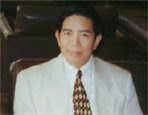
Hi friend and potential customer,
Here is a quick list of translations I do:
1. Birth certificates.
2. List of family memembers (Ein Htaung Zu Sayin)
3. Graduation certificates.
4. Restaurant menus.
5. Various works on meditation (I started doing insight meditation when I was a 16 year old boy and now I spend my time teaching insight meditation and Loving kindness meditation to individuals and groups in New York. You can email me for references.)
6. Development related work. (I worked for four years at the UNDP country office in Yangon, Myanmar as a national Programme Officer, one year in Cambodia under UNTAC - United Nations Transitional Authority in Cambodia and more than 19 years at the UNDP headquarters in New York, mostly with UNDP but also with other UN agencies like UNFPA and the UN secretariat.)
7. I do voiceovers. (If you are doing a Myanmar video story and need subtitles in English, I'm your man. Email me for price quotes. We can work out a good deal depending on your needs in terms of urgency or content.)
8. If you have any other need relating to translation and interpretation, please email me. You will be pleasantly surprized by the quality of work, professionalism, timeliness and attention to detail.
If you need to call me here is my cell phone number:
201-923-7485
I can also be contacted by Skype, MSN messenger or Yahoo messenger, depending on your need. Just email me and we will connect to make sure that your project is a success.
If you need an online project management to click on this website: http://www.helpinguniverse.com
You are given all the tools you will need to make your project (whatever it is, big or small, a BIG success.)
Kyaw Myaing
Saturday, September 19, 2009


Thursday, August 6, 2009
38 Mangalas - the story behind the sermon
Here is a the behind the Mangala Sutta. This is a piece I did for another of my websites.
==========
==========
Once upon a time Lord Buddha was residing in the town of Sarvasti, at Jetavana monastery, donated by a very wealthy man called Anathapindika. Late that night a certain Deva, emitting exceedinly brilliant rays appeard before him . The rays of the Deva were so bright that the whole grove of Jetavana monastery was lit up. After paying respects to the Blessed Lord the Deva stood in an approriate place and asked for permission to ask some questions. Lord Buddha gave permission by remaining silent. The questions that the Deva asked and the answer that Lord Buddha gave came to be known as the "Thirty-eight auspices". In Myanmar, which is a Theravada country, they are known as the "Thirty-eight Mingalas".
Let me tell you a bit about how this story came about.
It was during the time when Lord Buddha was still alive. Now it came to pass that there were discussions and lectures held in towns and villages. On one occasion, a certain topic was put forward. "What is Mingala?". That was the question. Is Mingala something that is seen, or heard or perceived by the senses. Although the question was asked there was no one who could give a satisfactory answer. Many answers were proposed but these answers did not satisfy all the different sectors of the community. Thus a great debate ensued and as a result of this there was a great stirring among the guardian spirits. As time passed the debate spread from the guardian spirits to the upper realms of the Deva loka right up to the abode of the Brahma gods. It is said that this matter was even debated at the assembly of the devas. Nor did it stop there. It eventually spread to the whole world system. When it had spread to the whole world system, the great debate did not end. It spread from one world system to the next and it finally spread to all the ten thousand world systems. No matter how far this debate had spread there was no one who could provide a satisfactory answer to the question: "What is Mingala?".
One day this question was brought before Sakka, the King of Tavatimsa Deva loka. Sakkka knowing that Lord Buddha was the right person to ask instructed a deva to approach the Enlightened One to ask this question. This is how this story of the Thirty-eight Mingalas came about.
The Deva explained to the Enlightened One that many devas and men have been trying to get a satisfactory answer as to what constituted "Mingalas" or "Auspices". Then the Deva said "O Blessed One, what are the Mingalas, when practised and observed bring about welfare and happiness?"
Wednesday, August 5, 2009
Another sample from the forthcoming book on Bo Bo Aung - Burmese weizzar

Source: from a forthcoming book on the life of Bo Bo Aung - Burmese weizzar
His Life and magick
Who is Bo Bo Aung? The Bo Bo Aung that I am going to write about was born a long time ago. If you travel extensively in Myanmar, especially in the Divisions where you find the Burmah majority, you will find his photograph on the altar. Even in the poorest hut, you can find his photo. He is a man dressed in white like a "phothudaw" with a white cotton turban, a white longyi dressed in the fashion of a Buddhist monk and a white shirt. In short he is a man in white symbolizing purity of thought, speech and action.
Why is he so popular among the Burmah people, you might ask. The answer is simple. He is real and he comes to assist you when you are in deep trouble. His only condition is that you must be of good conduct and that you must be doing something very sincerely for the propagation and promotion of the Buddha Sassana.
Before I go any further, let me explain a little bit about a "phothudaw". If you are Burmese you will understand right away. This explanation is for the non-Burmese readers. Burmese readers please bear with me for a moment. In Buddhist society in Myanmar there are Buddhist monks who wear saffron robes or robes coloured with the bark of special trees. They are usually of a dark brown earthly colour. The phothudaws are not monks. They are layman who devote themselves to religious work. Some of them do meditation and keep the precepts. Some of them help the chief abbot of the village monastery in keeping the monastery in good order. They dress in white. That is why in Myanmar, if a man is dressed all in white, we say "Oh, you look like a phothudaw".
Now to the real story about Bo Bo Aung. In short he is a weizzar. That means he is not an ordinary human being but a human being who has acquired supernatural powers through the practice of meditation and magick. I am using a different spelling for magick to differentiate from the sort of magic done by wayside magicians. He is a man of peace and a man devoted to the propagation of the Buddha Sassana. He has the same powers as the devas. That is why the Burmese call him a "htwet ya pauk" person. This means that he has found a magickal way to transform his body into the body of a deva without actually going through the process of dying. According to Theravada Buddhist belief, when a person dies, he or she may be reborn as a human being or as a deva in heaven. However, if that person is evil, he or she would certainly be reborn as an animal or as one of the inhabitants of hell or the lower spiritual world. By this I mean the world of devils and ghosts. In the case of a weizzar, there are two types of attaining the body of a deva. Some weizzars go through the process of dying. This is called "athay htwet". That is becoming a weizzar by dying first. Then there is another process called "ashin htwet". This is becoming a weizzar without dying. In this process, according to the books I have read and the tales that I have heard, the person who wants to become a weizzar, after the practice of the weizzar path, also called "htwet yat lan" in Burmese, transforms his body into the body of a deva through magick. The magick may be a magickal "dat lone" based on mercury or iron. In this process, the "datlone" is made through the process of alchemy. Or the magick may be through the use of herbs. The key word here is not the process itself for the process is a highly kept secret. Ordinary people will never get this process. This is carefully guarded by the weizzars.
There is also the path of the Inn Weizzar. Bo Bo Aung is said to be an expert in this process. Inns are magickal writings on copper sheets, bamboo paper or even on ordinary paper. Bo Bo Aung got into his possession an ancient writing of Inns by chance. That was how he became a weizzar.
When I was a young boy I heard other people singing a song that goes like this "Bo Bo Aung Ta Baung Nhe Paw lar bi". At that time I was so young and ignorant I didn't know what it meant. In translation it does not mean that Bo Bo Aung had only one thigh. It really means that Bo Bo Aung has appeared in Burma in fulfilment of a prophecy. A "Tabaung" in Burmese language means a prophecy. Sometimes you hear young children singing songs. Sometimes you may hear old crazy men on the street singing songs. These can be prophecies. You can never know. Sometimes messages apprear in strange places and strange ways.
In a book called "Bo Bo Aung and his path" Saya U Pe Tin has given us a detailed description of the life of Bo Bo Aung and his path. By path I mean his practices and the manner in which he acquired all the supernatural powers of a weizzar. To put this story into a proper timeframe, the time was a little after the Burmese era 1100. In terms of the Christian era it was 1700. Now there was a big village called Letpanshay village about a little over five Taing (in Burmese measurement of lenght) to the west of Taungtwin Gyi township. The headman of the village was Pho Hnaung and his wife was Mae Ein Phyu. At that time it so happened that Pho Pyi and Mae Ein together with their four children came to settle down at Letpanshay village from their original place called the Chindwin hills area west of the Ayeyarwaddy river. Eventually they became very friendly with the village headman and his wife.
Pho Hnaung and Mae Ein gave birth to a son called Maung Yazar and he later became known as Pho Yazar to honour the memory of the wise Burmese lord called Pho Yazar. In the family of Pho Pyi and Mae Ein was also born a young girl whose name was Mae Wa. Thus the sons and daughters in Pho Pyi's family were Mae Dun, the eldest daughter, Mae Gyan the second daughter, Mae Lun the third daughter, Pho Myat San Nyo, a son and Mae Wa the youngest child.
It thus came about that one day the village headman U Pho Hnaung passed away and his wife Mae Ein married Pho Pyi. By this time Pho Pyi's wife Mae Ein had already passed away. At that time U Pho Hnaung's son Maung Yazar was still young and so Pho Pyi took on the duties of the village headman of Letpanshay. When Maung Yazar came of age Pho Pyi gave the hand of his daugher Mae Dun to become Maung Yazar's wife. Out of this marriage were born Pho On, Mae Pyae, Mae Taloke, Mae Gon and Pho Hnin Gyi. Altogether five children.
Out of the marriage of Pho Pyi and Mae Ein was born Pho Myat San. When Pho Myat San came of age he married Mae Myat Hla. Out of this marriage was born Pho Ywe. Pho Myat San later married Mae Nyein Yar and out of this marriage were born Pho Din, Pho Aung and Min Yaung, three sons and a daughter by the name of Mae Ei. In total four children. If we count Pho Ywe who was born out of the marriage between Pho Myat San and Mae Myat Hla, Pho Myat San had a total of five children. Out of these five children of Pho Mya San, Pho Aung was later to become the "Bo Bo Aung" that is now so popular as a wizard nowadays. In Burmese language Bo Bo Aung is a true weizzar.
When was Bo Bo Aung born?
No one seems to know the exact date. However, it is known for certain that Bo Bo Aung was the class mate of Maung Waing who later became the Burmese King called Bodaw Phaya. We also know that Maung Waing was born in the Burmese era 1106 according to Burmese chronicles. Therefore it is safe to assume that Bo Bo Aung was born round about 1106. By that reckoning, Bo Bo Aung's age would be 200. Therefore Bo Bo Aung became a wizard or weizzar not too long ago.
Bo Bo Aung's childhood
As a young boy Maung Aung was smart, hard working, and was full of determination to learn his lessons. He paid great respects to his teachers, never told anything which was untrue, always helpful to others and would share whatever sweets or food he had with his friends. He liked to stay by himself in his own honest way. He was well liked by his friends.
Because his parents were poor he did not have nutritious food to eat. As a result of this poor diet he soon got skin disease and his friends called him "Maung Wei". "Wei" is a Burmese word for a mild skin disease.
The Sayadaw's dream
The presiding Sayadaw at Kye Ni monastery was well versed not only in the Buddhist scriptures but also in what is known in Burma as "the worldly arts". (worldly arts means esoteric subjects such as alchemy, talismanic magic, herbal medicine etc. In Burmese it is called Lawki Pyinnya as opposed to Lawkuttara Pyinnya which leads to the end of suffering and Nivarna). The area where the monastery was situated was well known for strange events and happenings connected with tree spirits, mountain spirits, weizzars and tapathees. ( A tapathee is a person whose aim in life is to study "the worldly arts". His powers are not as extensive as a weizzar - Kyaw Myaing).
One day the Kye Ni Sayadaw was having a nap after having his soon. Soon after, a holy man dressed in white garments came to the Sayadaw and led him to the lake at the back of the monastery and pointed towards a certain part of the lake and disappeared. This was actually a dream but to the Sayadaw, it felt as though it really happened. It was a strange and incredible dream. The Sayadaw did not have time to think about this dream as he was very busy with his usual duties of teaching the scriptures to the novices and attending the various "ah-hlus" (social functions) of the village. In Burma, it is customary to invite monks to give blessings and say prayers on special occasions such as Shinpyu ceremonies ect.
Cat's eye
One day the Sayadaw went to an ah-hlu in the village. On his way to this function he saw the head of a black cat and the head seemed to be alive and was making a crying sound. Seeing this head he ordered one of his young students to take it to the monastery. When he came back from the social function, the Sayadaw cut open the cat's head and saw a very rare cat's eye called "Amyu-tei". This cat's eye was left for the Sayadaw to see by the Weizzars and Zawgyis as he was well known for his interest in "the worldly arts" and meditation practices.
The copper manuscript
One day the Sayadaw remembered his dream again and thought, "this dream could not have occurred without a reason. I think I'd better go to the lake and see for myself".
So without telling anybody, the Sayadaw went to the lake. As he reached the edge of the lake his foot touched something in the water under a "thee" tree. Upon examining what he had found, it turned out to be a Kyeni Parabaik (a copper manuscript). After washing the copper manuscript, he took it to the monastery.
There are two types of parabaiks in Burma. One is made of Shan paper which is made of bamboo pulp and the other type of parabaik is made of copper. The copper parabaiks last longer and the script is more accurate due to the fact that metal stylus can make better marks on the copper surface. For these reasons, it had been the custom in Burma to write inscriptions about important subjects such as talismanic magic (Inn and Sama) on copper parabaiks.
It is not known for certain whether the Sayadaw put into practice what he read from the copper parabaik. He might have acquired some supernormal powers, no one knew. As for Maung Aung, every day was full of activities and it revolved around his studies and the time he spent playing with his friends. He did not have time to approach the Sayadaw.
Maung Aung's inheritance
Soon afterwards, the Kye Ni Sayadaw passed away. Some of the villagers thought that the Sayadaw had successfully acquired magical powers through the use of talismanic magic. They thought he had left the world leaving his body in the normal manner but had actually become a weizzar. Nevertheless, a special funeral ceremony was held for the Sayadaw.
After the ashes and bones have been collected and entombed, the three chief disciples of the Sayadaw, U Letkhana, U Arsara and U Ardeiksa began to divide the worldly possessions of the Sayadaw. The eldest disciple became the presiding Sayadaw of the monastery. The other two were content with whatever they got.
At that time, Maung Aung was playing near the monastery and came up to get some water. U Letkhana, who was now the presiding Sayadaw called Maung Aung and said jokingly, " you are also one of the Sayadaw's disciples. So you also deserve to get something. Take this pillow". Saying this, he threw a dirty pillow at Maung Aung. Maung Aung did not say anything. Because of his respect for U Letkhana and also because he did not want to offend him, Maung Aung picked up the dirty pillow and placed it by his bedside near his own pillow.
Now Maung Aung had this habit of writing on the floor using his slate. One day, as his elbow was hurting, he took this dirty pillow which he got from the Sayadaw and placed it under his elbow. After many days of using the pillow in this manner, the pillow started to tear at the place where Maung Aung used to place his elbow. He noticed something hard inside the pillow but Maung Aung, being still a young boy did not pay much attention to this.
One day a group of Thaik Sayas (people who study about the history of hidden treasures, especially treasures donated by devotees to the Buddha) came to their village and started doing some digging at a spot in front of the Shwe Intaung Pagoda. At this spot there was a pagoda and on the south of the pagoda there was a statue of a lion. This was where the Thaik Sayas were digging. They were digging at the foot of the lion statue. Ater much digging, the Thaik Sayas got a silver pot. When the monks from Kye Ni monastery heard of this, they started discussing about these events. Maung Aung listened to this conversation with great interest.
"Kodaw, I heard that our Sayadaw also got a copper parabaik", said the first monk.
"Yes, I have seen the Sayadaw reading this copper parabaik", replied the other.
"Now, where is this copper parabaik. Do you have any idea", asked the first monk.
"Ah, that's right. I remember the parabaik now. But I haven't seen it since our Sayadaw passed away. Didn't you see it when we were dividing the Sayadaw's possessions?"
The first monk replied, "No, I didn't see it. I know this copper parabaik is very special but did not dare to ask the Sayadaw about it when he was alive. I think the parabaik contains very valuable writings about Lawki Pyinnya".
The other monk said, "Yes of course. Now we have to start looking for it".
The first monk replied, "You are right Kodaw, but he has not a single clue as to where it could be".
(Kodaw: a term used by monks to address one another. - Kyaw Myaing)
Here is a sample of my translation - from Burmese to English
This is a translation I did for the Aungzay Institute
Source: www.aungzay.org
The author, U Pho Hlaing was in effect the king’s principal advisor on foreign affairs. He was not a royal interpreter as some have written. He spoke to foreign envoys through an interpreter and acted as the King’s advisor. He was also associated with the movement to modernize the kingdom by establishing a constitutional monarchy that would limit the powers of the monarch in the interest of the kingdom. From the various proposals that U Pho Hlaing made in his book, I could really commend him for the courage he had to make these reforms in the first place. During a time when Burmese kings were lords of life and death, any proposal that did not please the king could have meant certain death. He was in fact sent to jail for a brief period but he was finally released and all his titles and privileges restored. At one time he met death face to face and had the courage to stand up to King Mindon himself.
Mhawbi Saya Thein recorded in his notes that at one time U Pho Hlaing recited the following verse to King Mindon in relation to an incident that occurred at the court. “Giving sisters, younger, elder Including one’s own daughter even, Giving presents to curry favor, Devoid of courage and knowledge. This type of minister, if he comes to power Will be the reason of the state’s decline.” The meaning of the verse was that if there were certain ministers in the kingdom who were bribing the king by presenting their sisters and daughters to win the king’s favor without having any knowledge or learning, that would be the cause for the destruction of the kingdom. This made the king furious and pulling out his spear, threatened to kill U Pho Hlaing on the spot. U Pho Hlaing stood up and proudly pushing forth his chest, asked the king to strike with the spear. The king did not wish to kill him so he silently went into his chamber. His colleagues asked him why he would wish to risk his life in this manner. U Pho Hlaing replied that all ministers at the court had the duty to say what they believed was right even if it meant death.
The word “amat” means in Burmese “straight forward”. U Pho Hlaing even recommended in his book that the king set up a bank where all the money of the kingdom should be kept with proper accounts; he advised the king that in the appointment of ministers and court officials, the appointments should be made according to merit; he recommended that the laws should be made only after careful deliberations had been made by the ministers of the Hluttaw; he also recommended that the king and his royal family should be paid a set amount for their personal expenses and that the king should not dip into the state coffers even if he wanted to donate to the Shanga or the pagodas. This last recommendation did not go well with Queen Supayalat who was King Thibaw’s chief queen. Now that I have made you, the reader interested in this book, let us see who U Pho Hlaing (background )was. U Maung Htin wrote in his book “Raja Dhamma Thingaha Kyan” that U Pho Hlaing was born during the reign of King Bagyidaw, the fourth founder of Ratanapura, in the year of the Burmese era 1191 (10th day of the new moon of Hnaung Tagu, on a Friday) to Yenangyaung Myosa, Yindaw Wungyi, Thado Minhla Kyaw Htin and Mae Nyein. His place of birth was in a village called Ywa Palei, Upper Taloke Myo village tract, Myingyan Township.
As a youngster he was called Maung Po Hlaing but his pet name was Maung Hlaing. His ancestors were officials of the Burmese court. King Bagyidaw had a minister called Shwepyi Wun Letwe Windaw Hmu. The son-in-law of this minister was a court clerk. This court clerk had a son. King Bagyidaw looked after the son of this court clerk and made him one of his close comrades and gave him the position of Sitthugyi with the title of Thadoe Minhla Kyaw Htin. This Sitthugyi was also known as the Yindaw Wungyi. The son of this Yindaw Wungyi was U Po Hlaing. U Po Hlaing also received the title of Letwe Windaw Hmu just like his great-grandfather. He was also a close comrade of King Mindon. Thus U Pho Hlaing was a close comrade of three Kings and he took great pride of this fact.
Source: www.aungzay.org
The author, U Pho Hlaing was in effect the king’s principal advisor on foreign affairs. He was not a royal interpreter as some have written. He spoke to foreign envoys through an interpreter and acted as the King’s advisor. He was also associated with the movement to modernize the kingdom by establishing a constitutional monarchy that would limit the powers of the monarch in the interest of the kingdom. From the various proposals that U Pho Hlaing made in his book, I could really commend him for the courage he had to make these reforms in the first place. During a time when Burmese kings were lords of life and death, any proposal that did not please the king could have meant certain death. He was in fact sent to jail for a brief period but he was finally released and all his titles and privileges restored. At one time he met death face to face and had the courage to stand up to King Mindon himself.
Mhawbi Saya Thein recorded in his notes that at one time U Pho Hlaing recited the following verse to King Mindon in relation to an incident that occurred at the court. “Giving sisters, younger, elder Including one’s own daughter even, Giving presents to curry favor, Devoid of courage and knowledge. This type of minister, if he comes to power Will be the reason of the state’s decline.” The meaning of the verse was that if there were certain ministers in the kingdom who were bribing the king by presenting their sisters and daughters to win the king’s favor without having any knowledge or learning, that would be the cause for the destruction of the kingdom. This made the king furious and pulling out his spear, threatened to kill U Pho Hlaing on the spot. U Pho Hlaing stood up and proudly pushing forth his chest, asked the king to strike with the spear. The king did not wish to kill him so he silently went into his chamber. His colleagues asked him why he would wish to risk his life in this manner. U Pho Hlaing replied that all ministers at the court had the duty to say what they believed was right even if it meant death.
The word “amat” means in Burmese “straight forward”. U Pho Hlaing even recommended in his book that the king set up a bank where all the money of the kingdom should be kept with proper accounts; he advised the king that in the appointment of ministers and court officials, the appointments should be made according to merit; he recommended that the laws should be made only after careful deliberations had been made by the ministers of the Hluttaw; he also recommended that the king and his royal family should be paid a set amount for their personal expenses and that the king should not dip into the state coffers even if he wanted to donate to the Shanga or the pagodas. This last recommendation did not go well with Queen Supayalat who was King Thibaw’s chief queen. Now that I have made you, the reader interested in this book, let us see who U Pho Hlaing (background )was. U Maung Htin wrote in his book “Raja Dhamma Thingaha Kyan” that U Pho Hlaing was born during the reign of King Bagyidaw, the fourth founder of Ratanapura, in the year of the Burmese era 1191 (10th day of the new moon of Hnaung Tagu, on a Friday) to Yenangyaung Myosa, Yindaw Wungyi, Thado Minhla Kyaw Htin and Mae Nyein. His place of birth was in a village called Ywa Palei, Upper Taloke Myo village tract, Myingyan Township.
As a youngster he was called Maung Po Hlaing but his pet name was Maung Hlaing. His ancestors were officials of the Burmese court. King Bagyidaw had a minister called Shwepyi Wun Letwe Windaw Hmu. The son-in-law of this minister was a court clerk. This court clerk had a son. King Bagyidaw looked after the son of this court clerk and made him one of his close comrades and gave him the position of Sitthugyi with the title of Thadoe Minhla Kyaw Htin. This Sitthugyi was also known as the Yindaw Wungyi. The son of this Yindaw Wungyi was U Po Hlaing. U Po Hlaing also received the title of Letwe Windaw Hmu just like his great-grandfather. He was also a close comrade of King Mindon. Thus U Pho Hlaing was a close comrade of three Kings and he took great pride of this fact.
Welcome to Burmese Translations
Dear friends,
I have set up this blog to help me connect with all of you who might need my services.
I have been doing translations for the Burmese community and enjoy helping them out in their various needs. These are the types of translations I am doing:
1) Immigration documents
2) Birth certificates
3} Education certificates
4) Menus for Burmese restaurants.
5) Burmese history, culture and literature.
Please contact me for rates if you need my services.
Kyaw Myaing
p.s. You can also visit my Burmese community website at:
www.ayezay.com
I have set up this blog to help me connect with all of you who might need my services.
I have been doing translations for the Burmese community and enjoy helping them out in their various needs. These are the types of translations I am doing:
1) Immigration documents
2) Birth certificates
3} Education certificates
4) Menus for Burmese restaurants.
5) Burmese history, culture and literature.
Please contact me for rates if you need my services.
Kyaw Myaing
p.s. You can also visit my Burmese community website at:
www.ayezay.com
Subscribe to:
Posts (Atom)